REAL RESULTS / SKIN REVISION
Scar Revision Results in Calgary: Real Before-and-After Examples
Real photographs. Different treatment stages. A closer look at scar revision, camouflage and stretch-mark progress from our Calgary clinic.
Real scar revision results start with context.
If you are researching scar revision in Calgary, before-and-after photos can make the conversation more concrete. You can see the area being discussed, notice changes in appearance and bring better questions to a consultation. The most useful examples also explain when the photograph was taken and what treatment had happened by that point.
This collection brings together real treatment photographs supplied by Wholesome Empire. We have kept the original comparison panels and their labels. Some show progress after an identified number of sessions; others show an area still healing or a plan with further treatment ahead. They are individual examples, not a promise that your skin will follow the same course.
Browse the complete Real Results gallery, or use the examples below to understand the difference between an early progress photo and a completed treatment plan.
Six weeks after a first scar revision session.
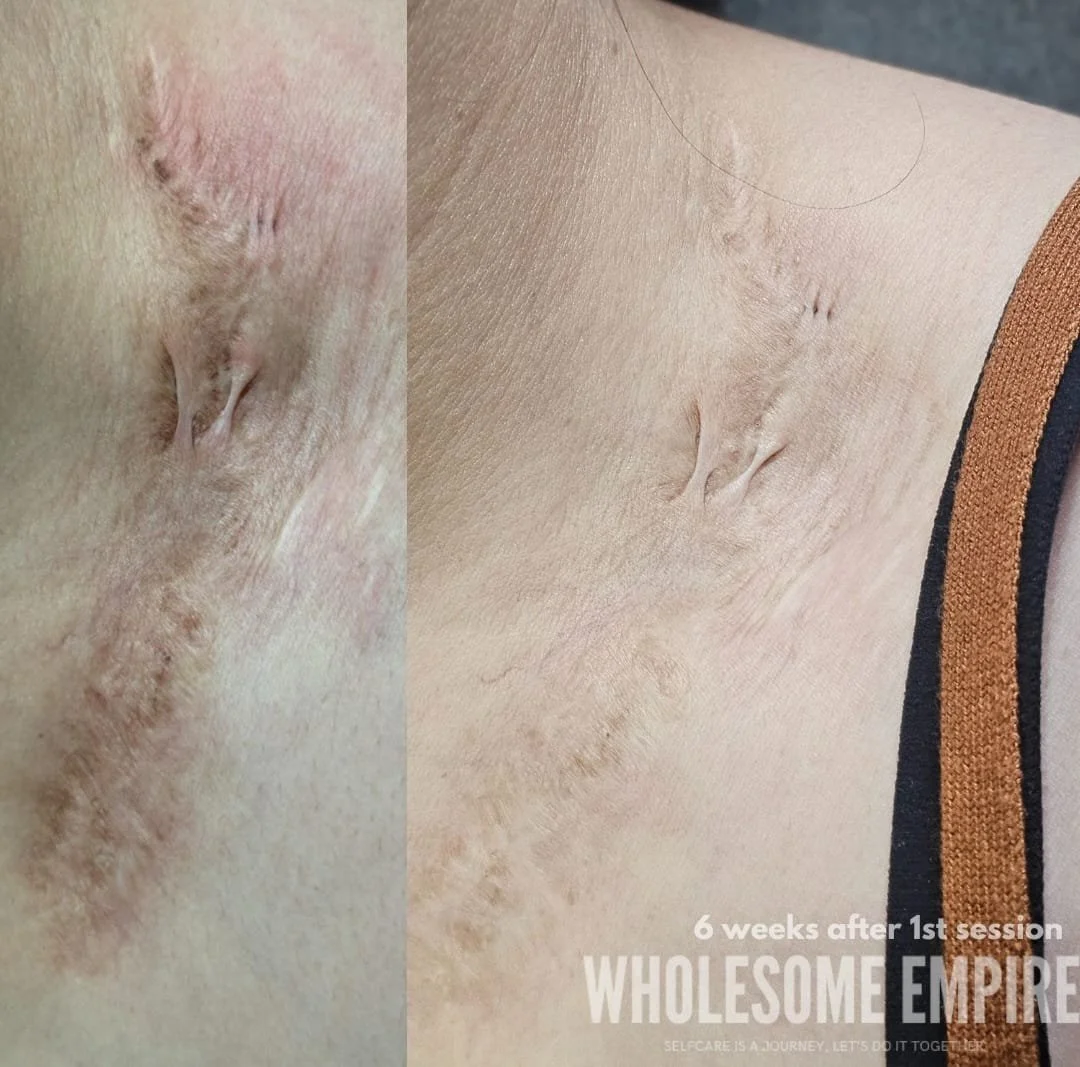
This neck and upper-chest comparison is labelled six weeks after the first session. That detail gives the photograph a useful place in the person’s treatment journey. It does not tell us that every scar needs one session, or that six weeks is the right review date for everyone.
When looking at an example like this, describe the feature that matters to you: the visible colour difference, the outline of the mark or how its texture appears. Your practitioner can explain whether a similar concern is suitable for assessment and what a realistic goal would be.
Scar camouflage: progress before the plan is finished.
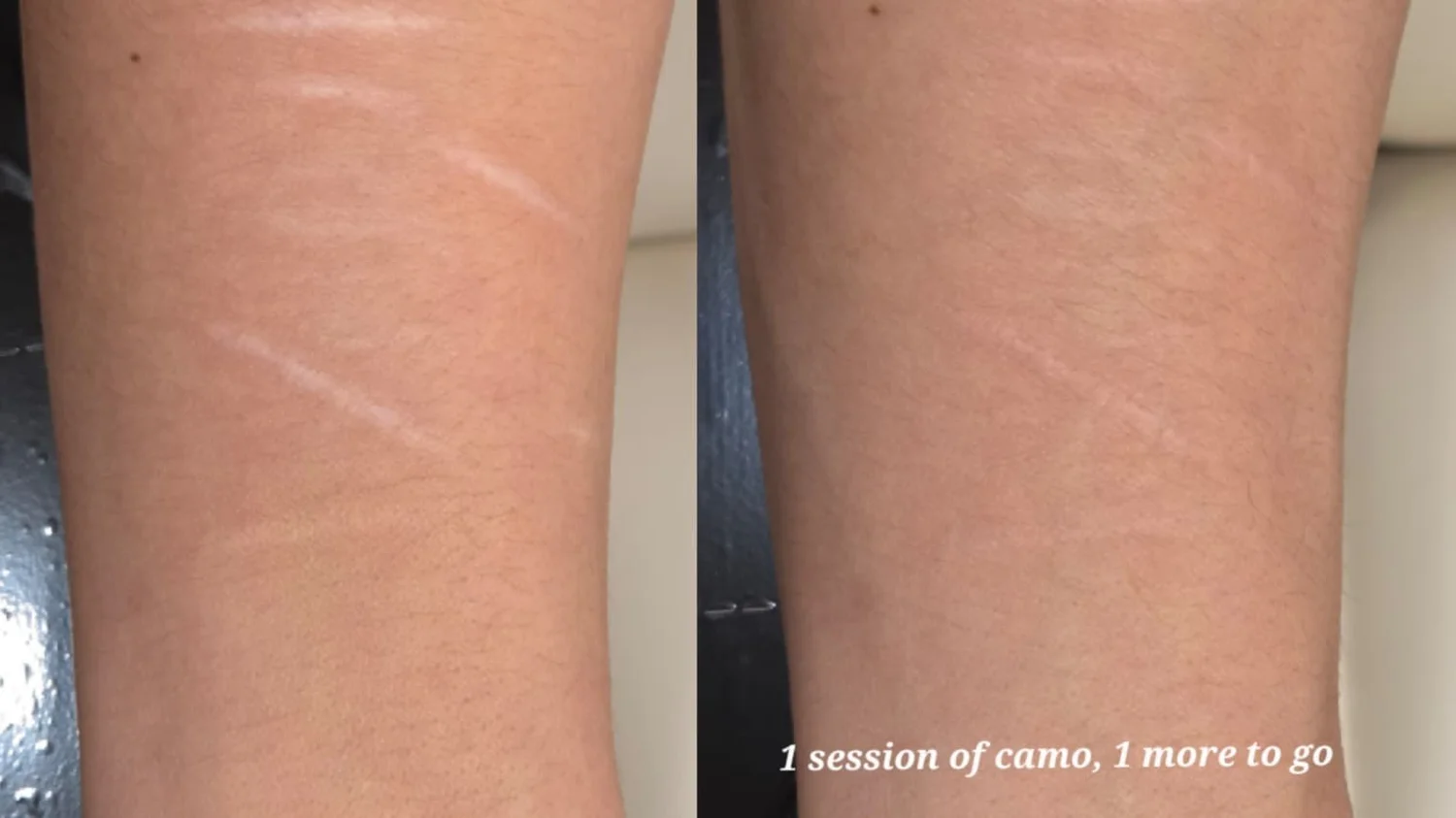
The original panel says one session of camouflage, with one more to go. We are showing it as progress during a plan, rather than calling it a final result.
Scar camouflage uses selected tattoo pigment to address colour contrast in suitable healed skin. It does not remove scar tissue. Matching a pale area to surrounding skin is a different goal from addressing texture, which is why it helps to understand the technique behind the photograph. Ask how colour matching, healing and future changes in skin tone could affect your own plan.
A staged approach: neutralization, then camouflage.
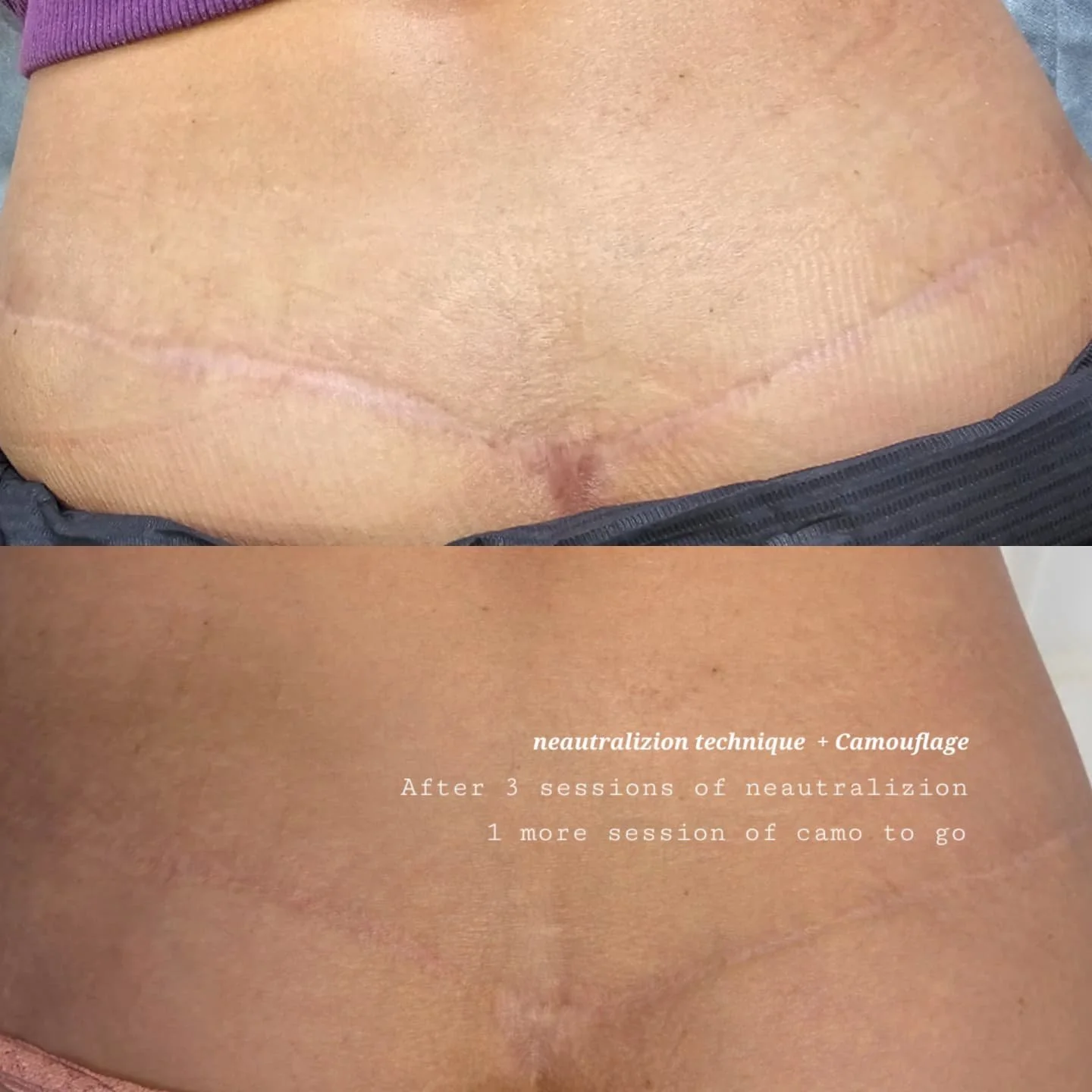
This abdominal-scar panel is labelled after three neutralization sessions, with one camouflage session still planned. The original label describes a sequence, not a one-appointment transformation. It also does not identify the cause of the scar, so we are not assigning it a surgical diagnosis.
If a staged plan is proposed for you, ask what each stage is intended to address, how readiness for the next stage will be assessed and what the quote includes. A photograph cannot answer those questions on its own. Our scar and stretch-mark treatment overview explains the different approaches you can discuss.
Facial scar progress across one and two sessions.
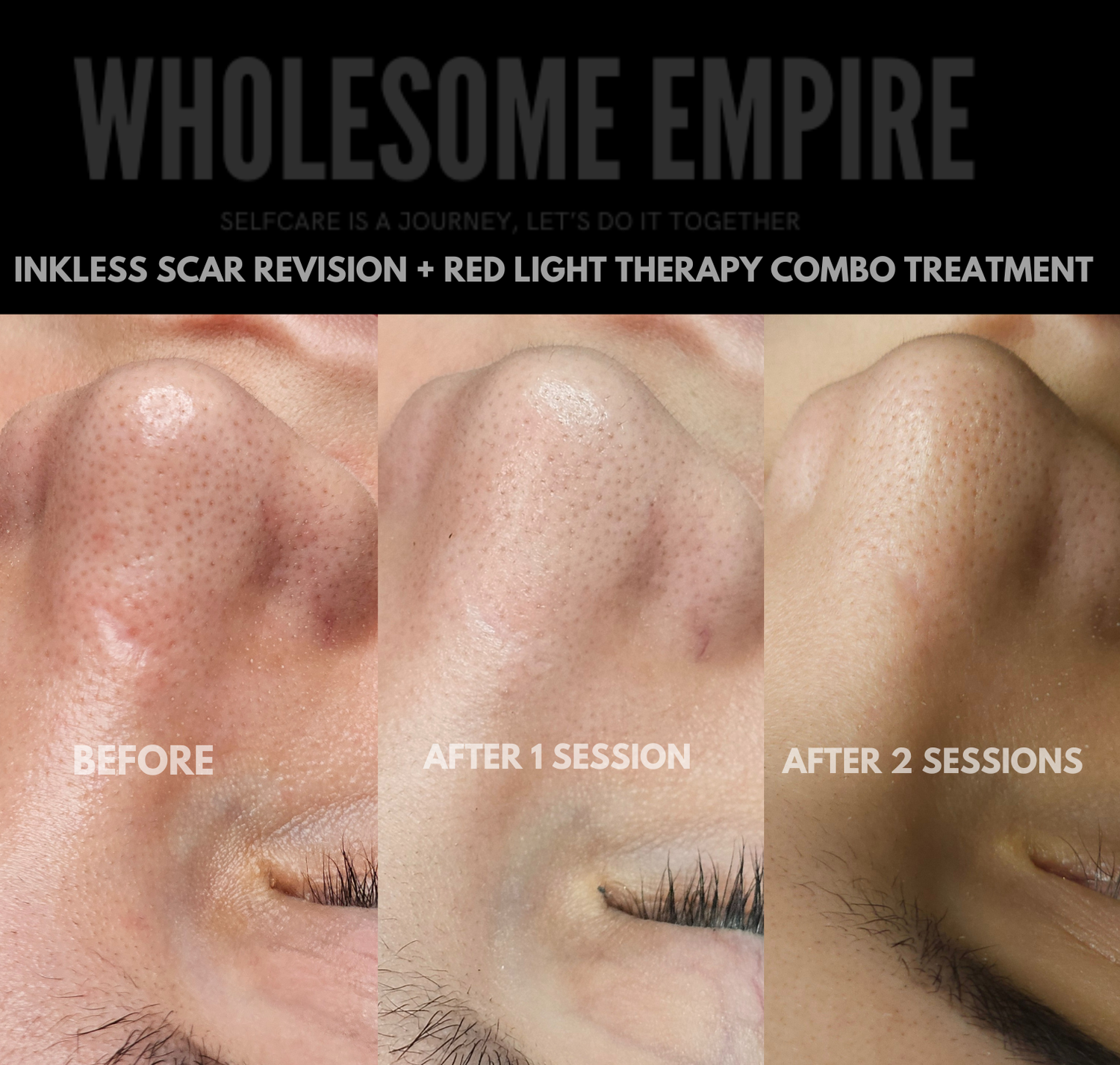
This nose-area comparison preserves three views: before treatment, after one session and after two sessions. The panel identifies the approach as inkless scar revision plus red light therapy. Because it shows a combined approach, the images do not establish how much of any visible change came from either part separately.
Our inkless scar revision service uses the clinic’s needling and topical-serum protocol without skin-tone tattoo pigment. A facial area needs an individual suitability discussion. Bring up any previous procedures, ongoing symptoms and the change you hope to see.
Stretch-mark revision: five weeks and still healing.
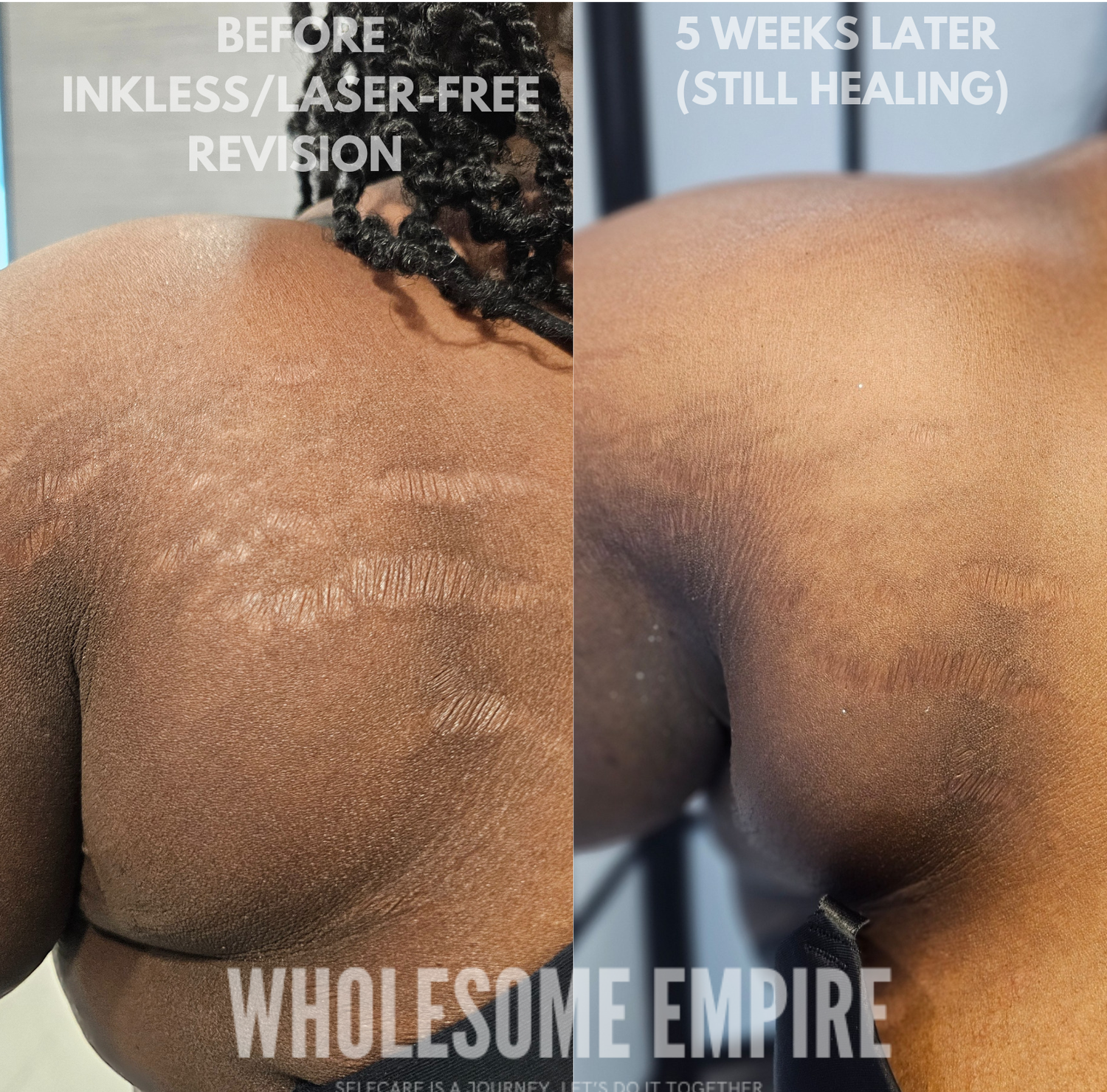
The chest stretch-mark example is explicitly labelled five weeks later and still healing. That wording is part of the result and remains visible in the image. It would be misleading to present the photograph as a settled final outcome.
Stretch marks are a type of scar. The American Academy of Dermatology explains that treatment may make stretch marks less noticeable, but does not remove them completely. That general guidance is separate from these individual clinic photographs.
Whether your concern is on the chest, abdomen, limbs or another area, our stretch-mark treatment guide can help you prepare questions about colour, texture and skin readiness.
What does “after three sessions” tell you?
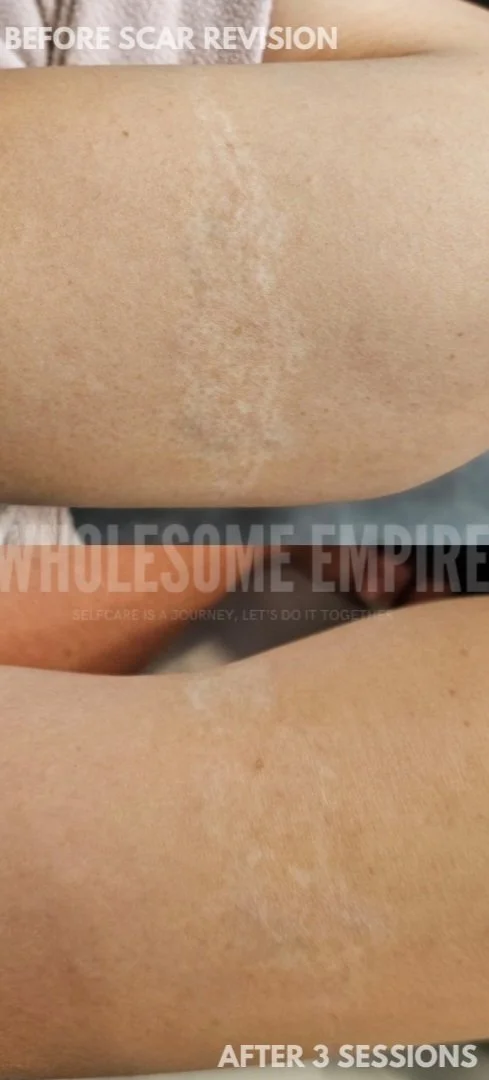
This panel identifies a comparison before scar revision and after three sessions. It tells us the documented treatment count for this example. It does not give the spacing between appointments or establish that three sessions will be enough for another person.
Skin response, the technique, the area and the goal all inform a personal plan. Ask when progress will be reviewed and what would lead your practitioner to continue, pause or change the approach. A fixed package should still come with a clear explanation of what is being proposed.
How to read before-and-after scar photographs.
- Read the stage. “After one session,” “still healing” and “one more to go” describe different points in a plan.
- Check the technique. Inkless revision, pigment camouflage and combined approaches are not interchangeable.
- Notice the photography. Lighting, angle, distance and skin position can change the appearance of colour and texture.
- Ask about a relevant example. A similar concern is a useful starting point, but another person’s result cannot predict yours.
Where a supplied panel does not state timing or treatment count, our gallery says so. The photographs have not been retouched to alter the skin for this article. These are clinic examples, not a controlled study or a measurement of treatment effectiveness.
Planning your own scar or stretch-mark consultation in Calgary.
You do not need to choose a procedure before contacting us. Start with the area you would like to discuss and what you notice most. We can talk through suitability, the proposed technique, realistic limitations, aftercare and how appointments could fit your routine.
Some scars need medical assessment before cosmetic treatment. The AAD’s scar-treatment guidance explains why understanding the scar type and health history matters. If an area is unhealed, painful or changing, raise that with an appropriate healthcare professional.
Bring these questions: Which approach fits my concern? What are its risks? When can progress be assessed? What is included in the quote? Our Pricing & Payments page explains personalized quotes and available financing options; eligibility and terms apply.
Request a complimentary virtual consultation with Wholesome Empire, or call 587-315-8299. Our clinic is at 909 5 Avenue SW, Suite 200, 2nd floor, Room 02, Calgary, Alberta T2P 3G5. We welcome questions from Calgary and surrounding communities.