AT-HOME CARE / PROFESSIONAL TRAINING
What you can learn at home before paramedical tattoo training.
Build your questions and foundational knowledge before practising a procedure on anyone.
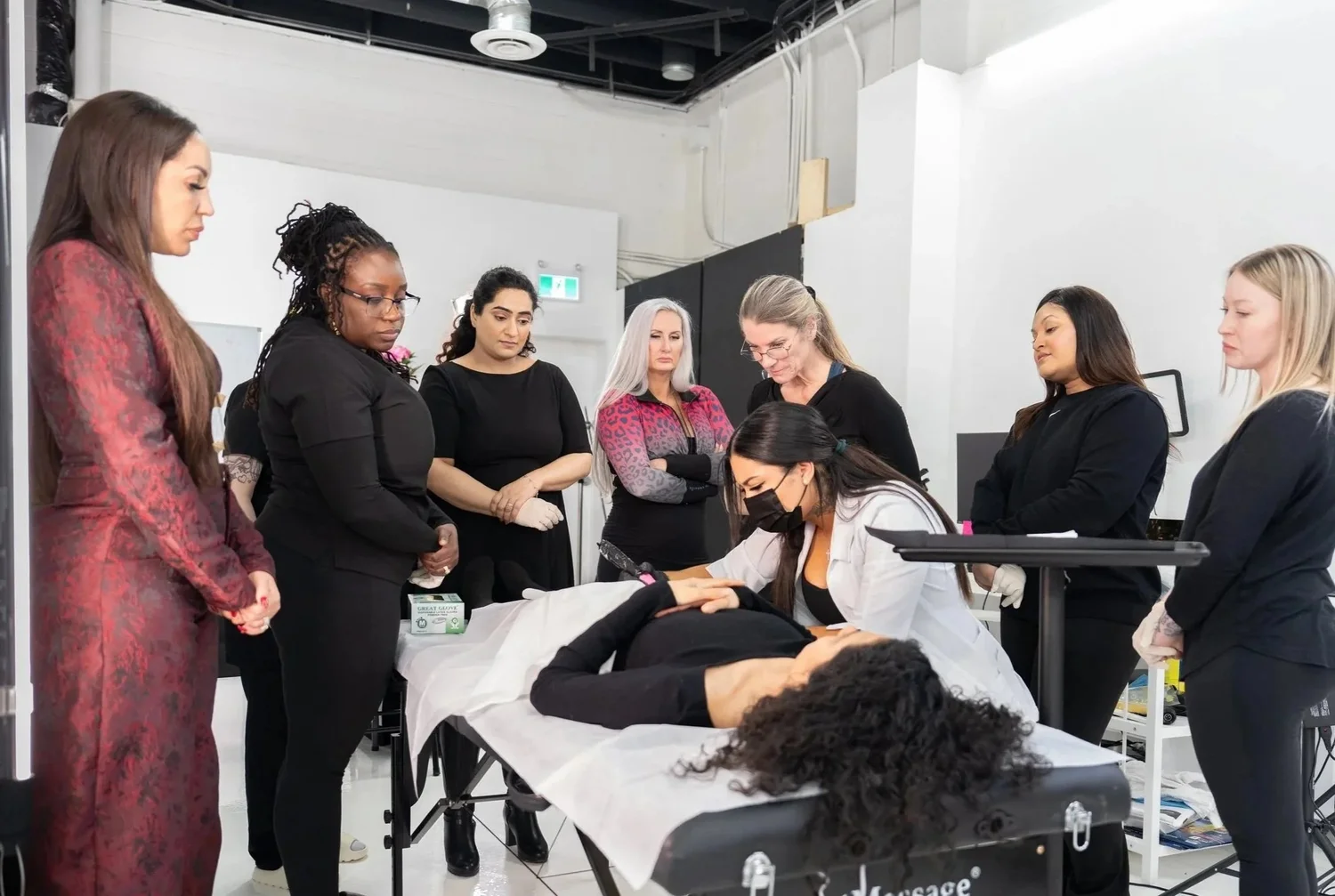
General education for everyday care and planning. For a fresh procedure, follow your practitioner’s individual aftercare instructions.
Start with the scope of the work.
Paramedical tattoo training can sound like one broad subject, but courses differ in the techniques they teach. Wholesome Empire’s Calgary training page describes inkless scar revision and camouflage. Read the current curriculum and ask how it fits your previous experience before assuming a course includes SMP, brows or another service.
Make home study useful and non-invasive.
Create a glossary of terms you want explained: scar texture, colour contrast, pigment selection, informed consent and aftercare. Study how a consultation is structured and write down questions about documenting goals and realistic expectations. Practise explaining the difference between revision and camouflage in plain language, without promising to erase a scar.
You can also prepare a practical learning plan: time for classes, travel to Calgary, questions for your mentor and the support you would need after training. These are worthwhile steps before purchasing extra equipment or advertising a new service. Do not practise skin penetration on yourself, friends or family from an online tutorial.
Read the safety framework before the technique.
The Government of Alberta: personal services regulation and standards sets out the province’s personal-services health and safety framework. Read the current requirements and discuss them with your educator and local public health contact. Completing a course is not, by itself, confirmation that a proposed business setup meets every requirement.
Alberta Health Services: tattoo and permanent makeup safety offers a useful client-facing view of tattoo safety, including sterile equipment and aftercare information. Use it to build questions about how professional training teaches safe systems, rather than treating a short checklist as a complete operating manual.
Ask how competence is developed and supported.
Discuss supervised model work, assessment, equipment included, mentorship, and what happens if you need more support before working independently. Ask which prerequisites apply and request the current course details and total cost. A training certificate does not promise clients, income or a particular treatment outcome.
For the best preparation for your professional goals, talk with our training team. Bring your experience and questions so the conversation can focus on an appropriate learning path, not simply a place in the next class.
Published guidance
The sources below support the general safety and care information in this article. They do not endorse this clinic or predict an individual treatment result.